
A Complete Guide to Safe & Enjoyable Self-Drive Holidays
There’s a reason Namibia is regarded as one of the world’s greatest self-drive destinations. Wide open roads, spectacular scenery, dramatic coastlines and incredible wildlife make every journey part of the adventure.
Unlike many destinations where driving can feel stressful or congested, Namibia offers travellers the freedom to explore at their own pace. Whether you’re driving along the Atlantic coastline, crossing the Namib Desert or heading north towards Etosha National Park, every kilometre offers something unique.
For many international visitors, however, driving in a different country can seem intimidating. Questions about road rules, licences, fuel stops and gravel roads are common.
The good news is that driving in Namibia is generally straightforward, safe and enjoyable with a little preparation.
This guide covers everything you need to know before getting behind the wheel.
Why Namibia is Perfect for Self-Drive Holidays
Namibia is built for road trips.
The country has excellent road infrastructure, relatively low traffic volumes and some of Africa’s most spectacular scenery.
A self-drive holiday gives you the freedom to:
- Stop wherever you like for photographs.
- Explore hidden attractions.
- Travel at your own pace.
- Discover small towns.
- Visit national parks.
- Enjoy the coastline.
- Experience the Namib Desert.
- Travel beyond the normal tourist routes.
Unlike organised tours, you’re not limited by someone else’s schedule.
Which Side of the Road Do You Drive On?
One of the first questions visitors ask is:
“Which side of the road do people drive on in Namibia?”
Like South Africa, Botswana and several other Southern African countries, Namibia drives on the left-hand side of the road.
The steering wheel is on the right-hand side of the vehicle.
Most international visitors adapt surprisingly quickly, especially when driving outside busy urban areas.
A useful tip is to remind yourself:
“Keep left.”
After a few kilometres it becomes second nature.
Can I Use My Foreign Driver’s Licence?
In most cases, yes.
Visitors may drive in Namibia using a valid driver’s licence issued in their home country, provided it is written in English or accompanied by an International Driving Permit (IDP) if required.
Always carry:
- Your driver’s licence.
- Passport.
- Rental agreement.
- Any required travel documents.
If your licence is not in English, obtaining an International Driving Permit before travelling is strongly recommended.
Is Driving in Namibia Safe?
Generally, yes.
Namibia is considered one of Africa’s most popular self-drive destinations because its roads are well maintained and traffic volumes are relatively low.
However, driving conditions differ from those in Europe or North America.
Important safety tips include:
- Avoid driving after dark where possible.
- Watch for livestock and wildlife near roads.
- Obey speed limits.
- Take regular breaks.
- Keep plenty of drinking water in the vehicle.
The biggest risks are often long distances and driver fatigue rather than traffic congestion.
Understanding Namibia’s Roads
Namibia has a mixture of road surfaces.
Tar Roads
Main highways connecting major towns are generally tarred and in good condition.
Examples include:
- Walvis Bay to Swakopmund
- Swakopmund to Windhoek
- Windhoek to Okahandja
These roads are suitable for ordinary passenger vehicles.
Gravel Roads
Many scenic routes and national parks include gravel roads.
While generally well maintained, gravel requires slower speeds and smoother driving inputs.
Avoid harsh braking and sudden steering movements.
Do I Need a 4×4?
One of the biggest misconceptions about Namibia is that every visitor needs a four-wheel-drive vehicle.
The answer depends entirely on your itinerary.
For many visitors staying around:
- Walvis Bay
- Swakopmund
- Windhoek
- Henties Bay
a standard passenger vehicle is perfectly suitable.
However, if you plan to drive on challenging sand tracks or remote routes, a suitable 4×4 vehicle may be required.
Always research your planned route before travelling.
Fuel Stations
Fuel stations are available in most towns, including:
- Walvis Bay
- Swakopmund
- Windhoek
- Usakos
- Omaruru
- Otjiwarongo
When travelling longer distances, it’s wise to refill whenever you have the opportunity.
Distances between towns can be much greater than visitors expect.
Never assume another fuel station is just around the corner.
Distances in Namibia
Namibia is a large country.
Although roads are generally quiet, destinations are often much further apart than they appear on a map.
Approximate driving times:
| Route | Approximate Time |
| Walvis Bay → Swakopmund | 30 minutes |
| Walvis Bay → Windhoek | 4–4.5 hours |
| Swakopmund → Spitzkoppe | 2 hours |
| Windhoek → Etosha | 4.5–5 hours |
| Walvis Bay → Sossusvlei | 5.5–6 hours |
Plan your day carefully and allow time for photo stops.
Wildlife on the Roads
One of Namibia’s greatest attractions is its wildlife.
It’s also one reason to avoid driving after sunset.
Animals that may cross roads include:
- Springbok
- Oryx
- Zebra
- Warthogs
- Cattle
- Donkeys
- Goats
Always reduce speed if animals are nearby.
Speed Limits
Always obey posted speed limits.
Typical limits are:
- Urban areas: 60 km/h
- Open roads: 100–120 km/h, depending on the road and posted signage.
Road conditions should always determine your speed, especially on gravel roads.
Mobile Phone Coverage
Major towns generally have good mobile coverage.
Remote areas may have limited or no signal.
Downloading offline maps before travelling is highly recommended.
Popular navigation apps include:
- Google Maps
- Waze (urban areas)
- Maps.me
Emergency Numbers
Keep these numbers readily available:
- Emergency Services
- Police
- Ambulance
- Your accommodation
- Your car rental provider
Before leaving, ensure someone knows your planned route if travelling into remote areas.
Why Rent from a Local Company?
Choosing a local rental company offers several advantages.
Local businesses understand:
- Road conditions.
- Seasonal weather.
- Popular destinations.
- Local driving advice.
- Coastal travel.
At Swakop Budget Car Hire, we’re based in Namibia and are happy to provide practical advice to help visitors enjoy a safe and memorable trip.
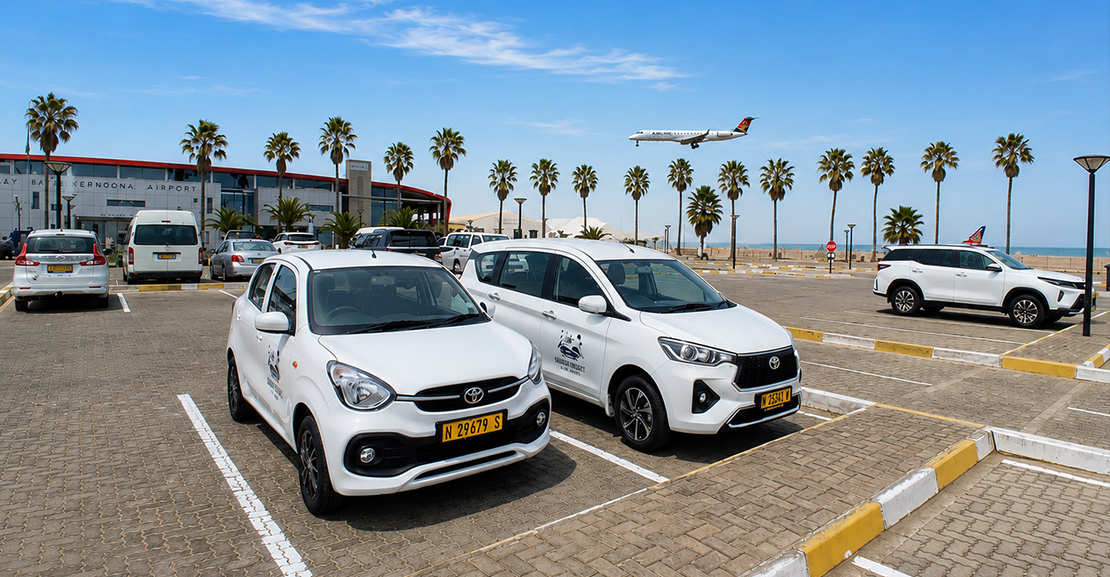
We offer modern automatic rental vehicles, friendly local service and FREE airport delivery at Walvis Bay Airport on bookings of three days or more, helping you start your adventure as soon as you land.
Browse our available vehicles here:
👉 https://www.swakopbudgetcarhire.com/explore-vehicles/
Frequently Asked Questions
Is Namibia safe for tourists to drive?
Yes. Namibia is one of Africa’s most popular self-drive destinations. Drive carefully, obey road signs and avoid travelling after dark where possible.
Do I need an International Driving Permit?
If your licence is not in English, an International Driving Permit is recommended. Check the requirements before you travel.
Can I drive from Walvis Bay to Swakopmund?
Yes. The journey takes approximately 30 minutes on a well-maintained tar road.
Should I rent a manual or automatic vehicle?
Many international visitors prefer automatic vehicles, particularly if they are adjusting to driving on the left-hand side of the road.
How often should I refuel?
Whenever you have the opportunity on longer journeys. Towns can be hundreds of kilometres apart.
Start Your Namibian Adventure
Whether you’re arriving for a business trip, a family holiday or the road trip of a lifetime, driving gives you the freedom to experience Namibia on your own terms.
With a little planning, you’ll discover why so many travellers return to Namibia year after year.
If you’re flying into Walvis Bay, Swakop Budget Car Hire is ready to help you get on the road with confidence.